The History of Dart Boards
From Wooden Targets to the Modern Board
The dartboard hanging in pubs, clubs and homes around the world today has a surprisingly long and fascinating history. The familiar board with 20 numbered sections, doubles, trebles and a bullseye did not appear overnight. It developed gradually from simple wooden targets into the highly engineered dartboards used by professional players today.
Early Wooden Targets
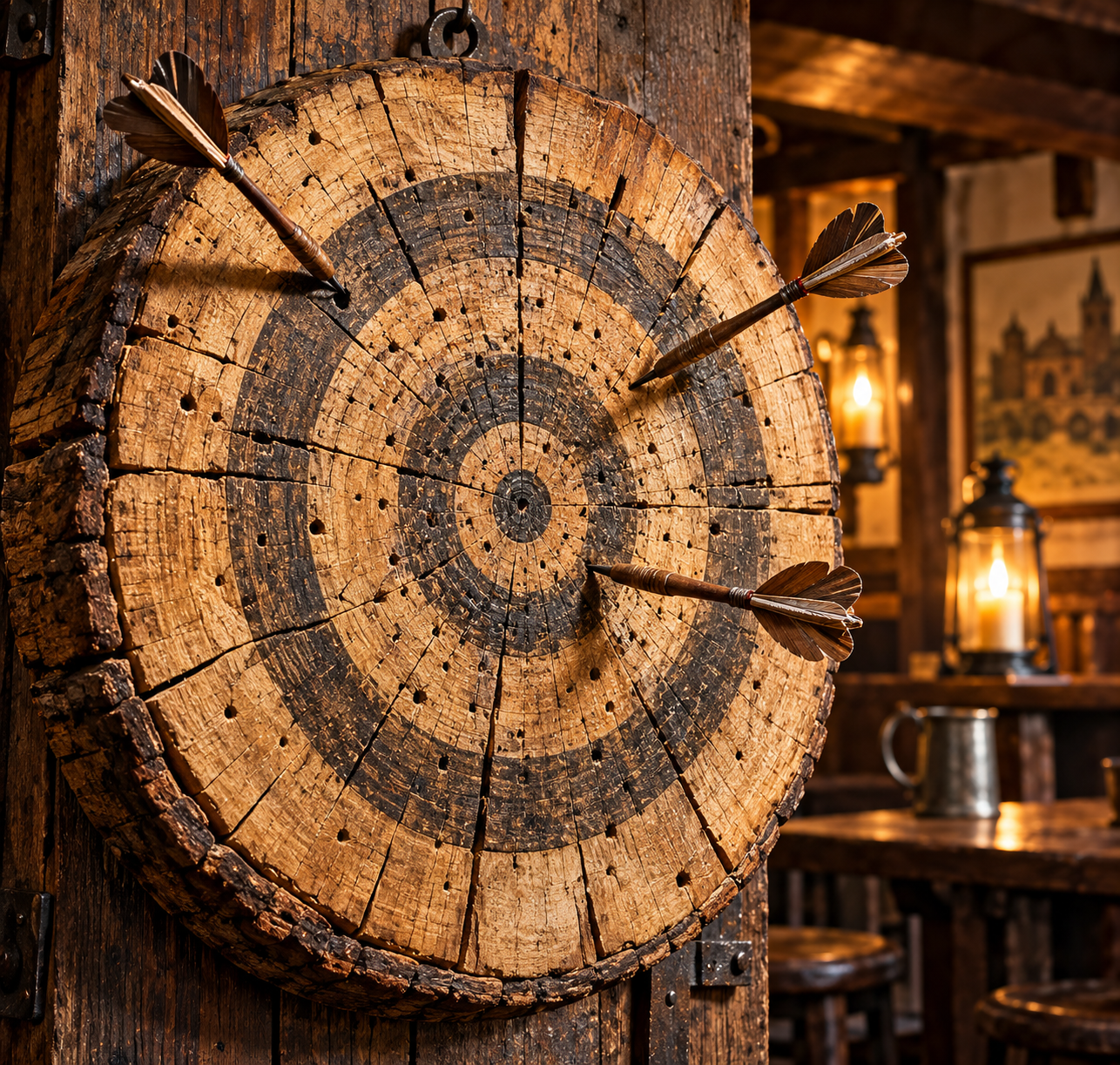
The earliest dartboards were very different from modern boards. Early players used targets made from solid pieces of wood, often elm. The natural rings and cracks in the wood provided convenient areas to aim at, and over time more organised scoring systems developed.
Wooden boards had one major disadvantage: they dried out. Traditional elm boards often needed regular maintenance to keep them usable. Nevertheless, wooden dartboards remained common in British pubs during the early development of darts.
The Regional Dartboards
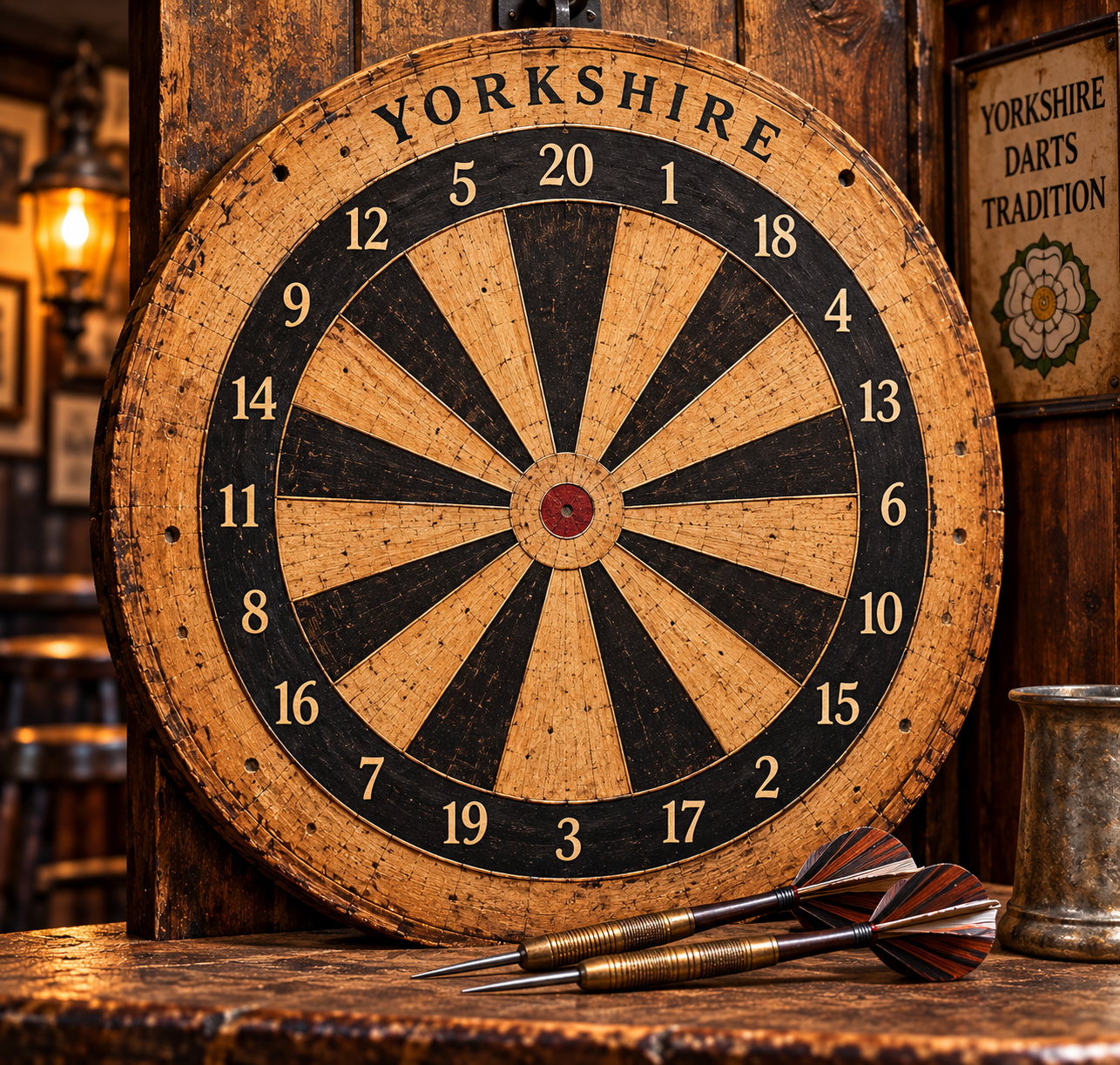
Before one design became standard, Britain had many regional dartboards. The Yorkshire Board became particularly important. It featured the familiar 20-number arrangement but did not have the treble ring or outer bull found on today’s standard board.
Other fascinating designs included the Manchester Log-End Board, London Fives, Kent Doubles and Lincoln boards. Some of these regional boards are still played on today, preserving an interesting part of darts history.
The Famous Numbering System
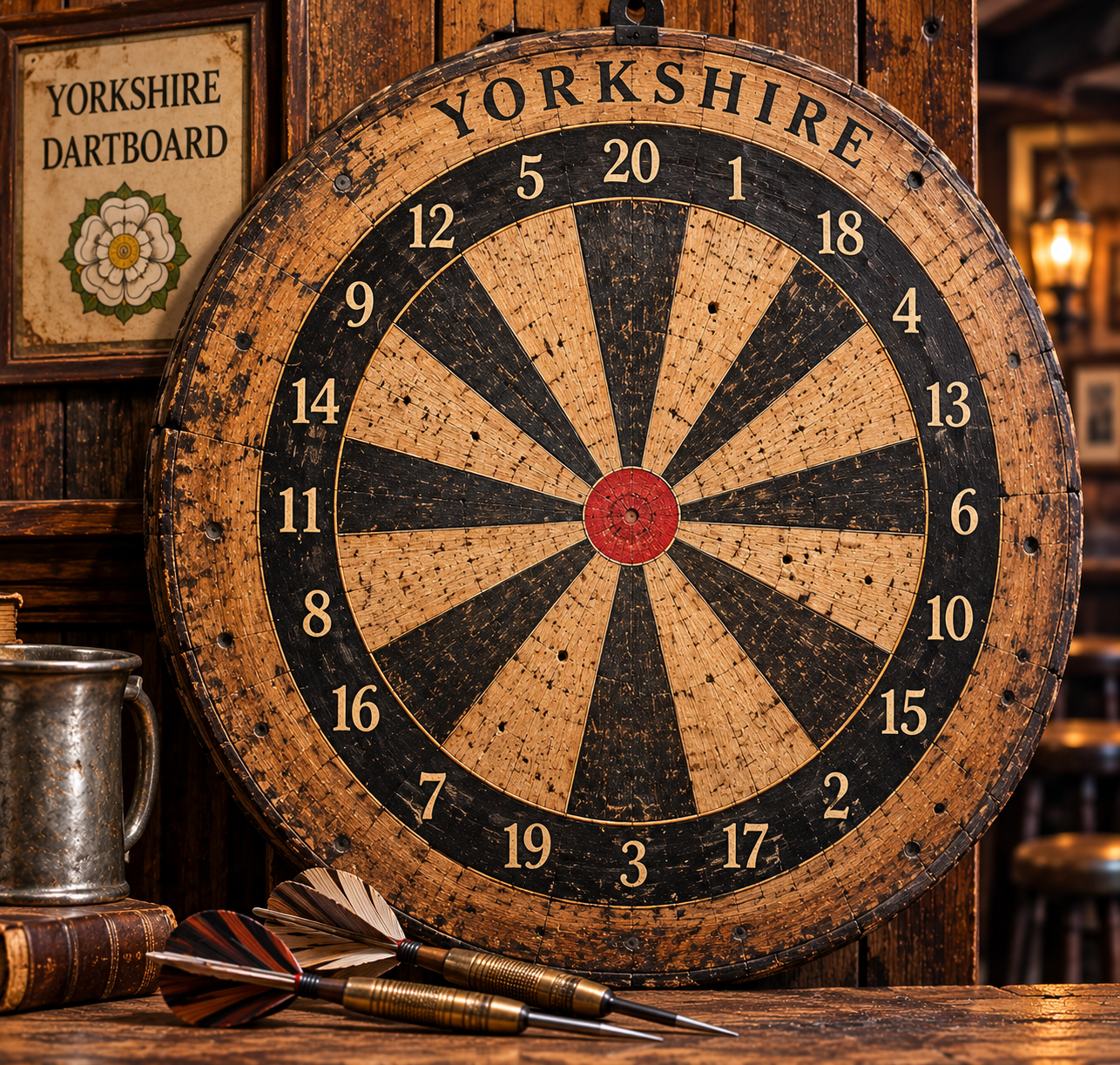
One of the great mysteries of darts has always been the strange arrangement of numbers around the board. For many years, the design was popularly credited to Brian Gamlin in the 1890s. However, darts historian Dr Patrick Chaplin’s research has challenged that story.
Thomas William Buckle of Yorkshire has a stronger historical claim. Around 1913, Buckle developed a twenty-section board containing the numbering sequence we recognise today. His Yorkshire Board helped form the foundation of the modern dartboard.
The London Trebles Board Arrives
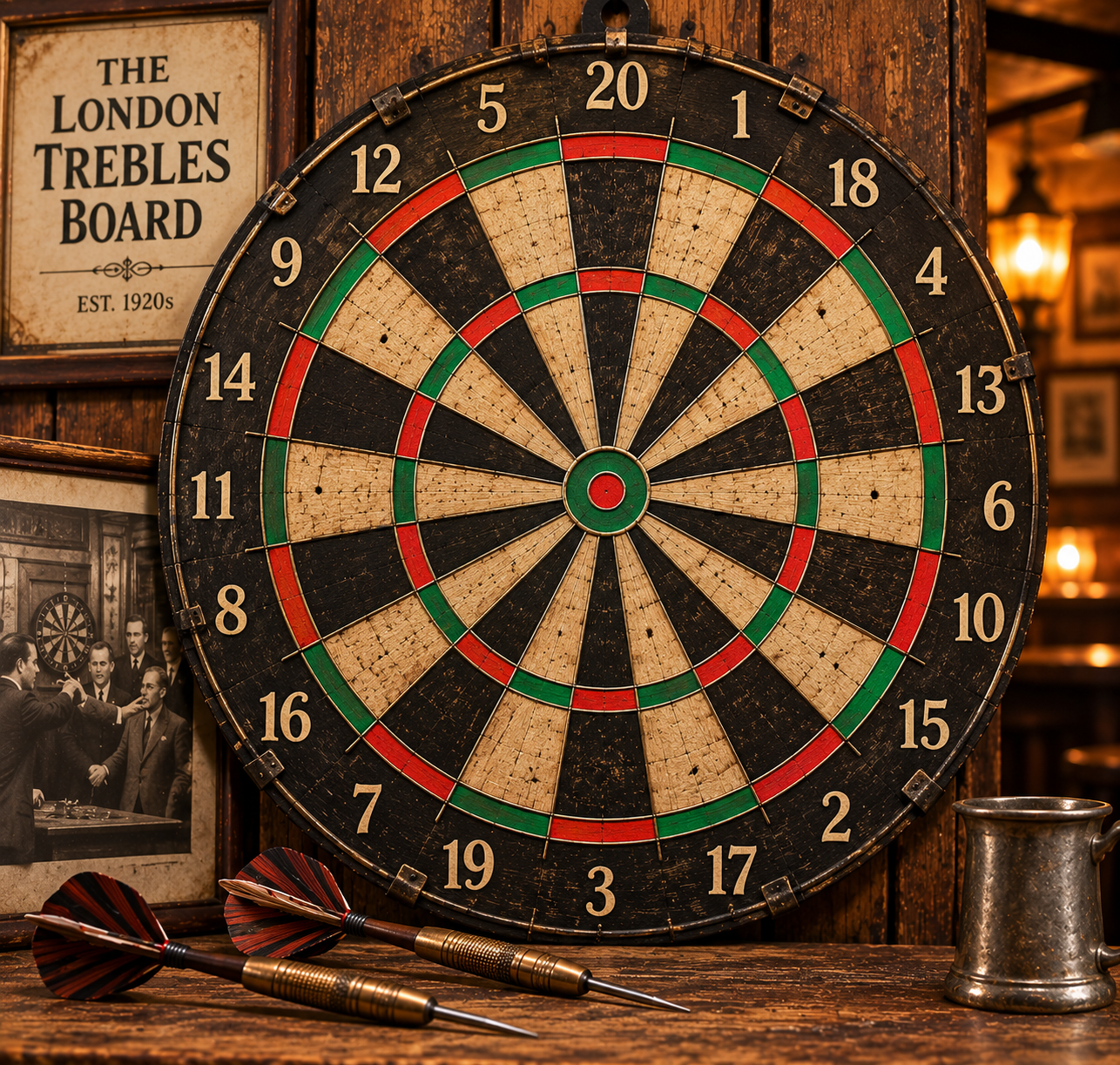
The next major development was the addition of the treble ring and outer bull. During the 1920s, the design that became known as the London or Trebles Board grew in popularity. By the late 1920s, a standardised version had emerged that looked remarkably similar to today’s dartboard.
The clever numbering arrangement rewards accuracy and punishes poor throws. For example, the valuable 20 sits between 1 and 5, meaning a small mistake can dramatically reduce a player’s score.
From Wood to Sisal
Another revolution came during the 1930s with the development of boards made from compressed fibres rather than traditional solid wood. These became commonly known as “bristle” dartboards. The material allowed holes made by darts to close as darts were removed, greatly increasing the life of the board.
The Modern Professional Dartboard
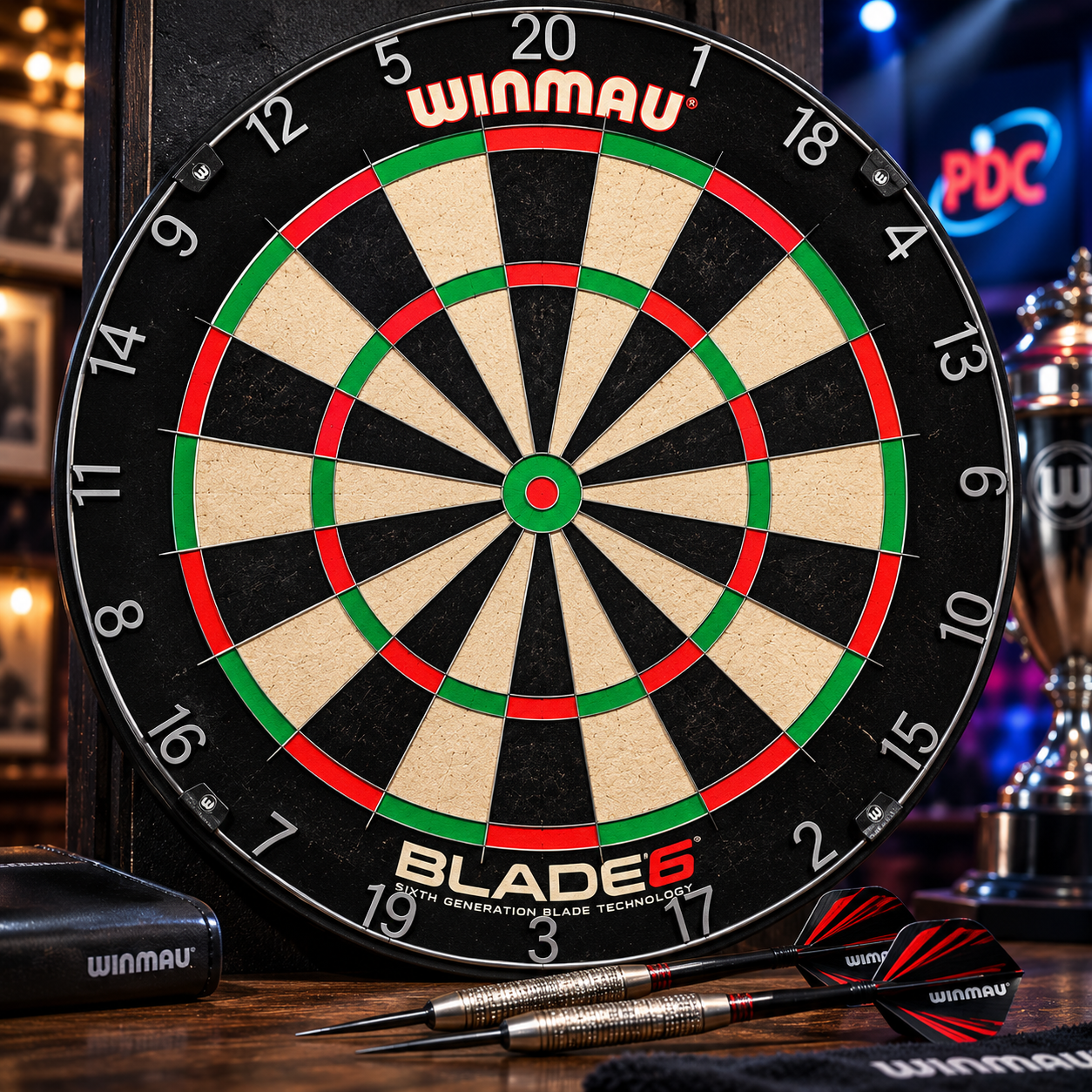
Modern dartboards retain the same basic design established almost a century ago, but manufacturing has improved enormously. High-quality boards use densely packed sisal fibres, thinner wiring and blade-style dividers designed to reduce bounce-outs.
From crude wooden targets and unusual regional designs to today’s precision tournament boards, the dartboard has undergone an incredible evolution. Yet its most recognisable feature – that wonderfully frustrating arrangement of numbers – has survived for generations.
The Yorkshire Board is one of the most important ancestors of the modern dartboard. It uses the familiar numbering sequence but has no treble ring and no outer bull.