The Evolution of Professional Darts Prize Money

The Evolution of Professional Darts Prize Money
From Modest Cash Prizes to Million-Pound World Champions
Professional darts has experienced one of the most remarkable financial transformations in modern sport. What began as a game associated with pubs, working men’s clubs and relatively modest cash prizes has developed into a global entertainment industry where the biggest stars can earn enormous sums of money.
Today, winning the PDC World Darts Championship can make a player a millionaire in a single tournament. Yet when the first major televised world championships were organised, the financial rewards were dramatically smaller.
The evolution of professional darts prize money tells a fascinating story about television, sponsorship, sporting rivalries, commercial investment and the growing popularity of darts around the world.
In this article, we explore how professional darts developed from relatively humble beginnings into a sport offering millions of pounds in annual prize funds. We examine the most important financial milestones, the players who benefited from the transformation and what the future could hold for professional darts.
1. The Early Days – When Darts Was More About Pride Than Money
Before professional darts became a major television attraction, the game was primarily associated with local pubs, clubs and regional competitions. Players often competed for trophies, modest cash prizes and the satisfaction of defeating their rivals.
During the 1960s and early 1970s, darts gradually developed a more organised competitive structure. National organisations, larger tournaments and television coverage helped transform the sport into something more commercially attractive.
The establishment of the British Darts Organisation in 1973 was particularly important. The BDO helped organise competitive darts and provided a structure for national and international championships.
However, even successful players could not necessarily rely on tournament winnings to provide a comfortable living. Travel, accommodation, equipment and time away from ordinary employment could absorb a significant proportion of their earnings.
Unlike today’s leading professionals, early darts champions did not have access to an extensive calendar of lucrative televised events. Their financial opportunities were much more limited.
Nevertheless, the foundations of a professional sport were being established. As television audiences grew, tournament organisers began to recognise the commercial potential of darts.
2. The 1978 World Championship – A Historic Financial Beginning
One of the most important milestones in darts history occurred in 1978, when the first BDO World Darts Championship was held in Nottingham, England.
The competition was a significant step towards establishing darts as a major spectator sport. It provided players with a prestigious world title and attracted television attention.
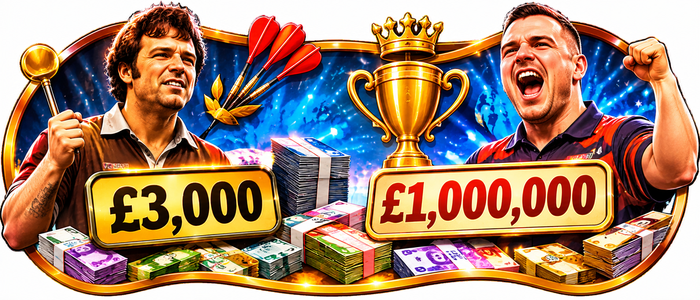
The tournament offered a total prize fund of £10,500, with £3,000 awarded to the winner.
Welsh player Leighton Rees became the inaugural champion after defeating John Lowe in the final.
Although £3,000 was a meaningful amount in 1978, it was tiny compared with the rewards available to modern world champions.
For perspective, the winner of the 2026 PDC World Championship received £1,000,000. That is more than 333 times the nominal prize awarded to Leighton Rees in 1978.
This comparison does not account for inflation, differences between organisations or changes in the professional tournament structure. Nevertheless, it illustrates the extraordinary growth of prize money at the highest level.
The 1978 championship demonstrated that darts could attract television audiences, sponsors and commercial interest. The sport had taken an important step towards becoming a professional entertainment business.
The Evolution of Professional Darts Prize Money Have been wild!
3. The 1980s – Television Stars and Growing Prize Funds
The 1980s are often remembered as one of the great eras of televised darts. Players such as Eric Bristow, John Lowe, Jocky Wilson and Bobby George became familiar personalities to television audiences.
Their distinctive characters, rivalries and competitive achievements helped turn darts into popular entertainment.
As the sport’s visibility increased, so did the financial rewards available at major tournaments.
The BDO World Championship winner’s prize increased from £4,500 in 1980 to £8,000 in 1983. These figures reflected a period of growing commercial interest in the game.
Sponsorship was particularly important. Companies recognised that televised darts could provide valuable advertising exposure to large audiences.
The Embassy-sponsored World Championship became one of the sport’s most recognisable events, and its association with televised darts helped establish a powerful commercial identity.
However, professional darts remained financially challenging for many competitors. While leading stars could earn significant amounts through tournament winnings, exhibitions and sponsorship, less successful players often needed other sources of income.
The difference between the earnings of famous champions and ordinary professional players was already becoming apparent.
This inequality would remain an important feature of darts as prize funds increased over subsequent decades.
4. The 1990s – The Professional Darts Split Changes Everything
The early 1990s brought one of the most significant developments in professional darts history.
A group of leading players became dissatisfied with the opportunities available in the existing darts structure, particularly regarding television exposure and the commercial future of the sport.
Their breakaway eventually led to the development of the Professional Darts Corporation, commonly known as the PDC.
The first championship staged by the breakaway organisation took place in 1994, when Dennis Priestley won the inaugural title.
The total prize fund was £64,000, and Priestley received £16,000 as champion.
Although these figures were relatively modest by modern standards, the creation of a competing professional structure fundamentally changed the commercial landscape.
Competition between organisations created pressure to attract leading players, secure television coverage and develop financially sustainable tournaments.
Phil Taylor became the defining personality of the emerging PDC era. His extraordinary success helped establish the organisation’s credibility and attracted increasing attention from sponsors and broadcasters.
The 1990s were therefore not simply a period of growing prize funds. They represented a structural transformation that helped create the modern professional darts industry.
The Evolution of Professional Darts Prize Money have made darts popular big time!
5. The 2000s – Professional Darts Becomes Big Business
The first decade of the 21st century witnessed a dramatic increase in the financial rewards available to leading PDC players.
In 2000, the PDC World Championship offered a total prize fund of £111,000, with £31,000 going to champion Phil Taylor.
By 2005, the championship prize fund had increased to £300,000, and the winner received £60,000.
An even more important milestone arrived in 2006, when the world champion’s prize reached £100,000 for the first time in PDC World Championship history.
The overall tournament prize fund reached £500,000.
This growth was supported by increasing television exposure, commercial sponsorship and the expanding popularity of the sport.
The introduction and development of additional professional tournaments also created more opportunities for players to earn money throughout the year.
Competitions such as the World Matchplay, World Grand Prix, UK Open and Premier League helped create a more comprehensive professional calendar.
Rather than depending almost entirely on one annual world championship, successful players could compete for substantial prizes at numerous events.
The 2000s helped transform darts from a sport with a handful of major financial opportunities into a genuine professional circuit.
6. The 2010 World Championship – The £200,000 Milestone
The 2010 PDC World Darts Championship marked another important financial breakthrough.
The total prize fund reached £1 million, with £200,000 awarded to the winner.
Phil Taylor claimed the title after defeating Simon Whitlock in the final, collecting the record-breaking first prize.
The amount represented a remarkable increase compared with the early years of the PDC.
Just sixteen years earlier, the inaugural PDC world champion had received £16,000. By 2010, the winner’s prize had increased by a factor of 12.5.
The championship’s growing financial significance reflected the increasing popularity of darts on television and the expanding commercial value of major events.
The move to Alexandra Palace in London in 2008 also helped establish the World Championship as a major annual sporting and entertainment occasion.
Large crowds, enthusiastic supporters and memorable matches contributed to the tournament’s distinctive atmosphere.
The £200,000 milestone demonstrated that professional darts had entered a new financial era, with the potential for exceptional players to earn life-changing sums through tournament success.
The Evolution of Professional Darts Prize Money in 2010 was a milestone.
7. PDC World Championship Prize Money Through the Years
The following table highlights selected milestones in the evolution of PDC World Championship prize money.
| Year | Total Prize Fund | Winner’s Prize | Champion |
|---|---|---|---|
| 1994 | £64,000 | £16,000 | Dennis Priestley |
| 2000 | £111,000 | £31,000 | Phil Taylor |
| 2005 | £300,000 | £60,000 | Phil Taylor |
| 2006 | £500,000 | £100,000 | Phil Taylor |
| 2010 | £1,000,000 | £200,000 | Phil Taylor |
| 2014 | £1,050,000 | £250,000 | Michael van Gerwen |
| 2016 | £1,500,000 | £300,000 | Gary Anderson |
| 2018 | £1,800,000 | £400,000 | Rob Cross |
| 2019 | £2,500,000 | £500,000 | Michael van Gerwen |
| 2024 | £2,500,000 | £500,000 | Luke Humphries |
| 2025 | £2,500,000 | £500,000 | Luke Littler |
| 2026 | £5,000,000 | £1,000,000 | Luke Littler |
Figures represent nominal prize money in British pounds, without inflation adjustments. Championship years refer to the year in which the final was played.
The table demonstrates a remarkable financial transformation. Between 1994 and 2026, the PDC World Championship’s total prize fund increased from £64,000 to £5 million.
That represents an increase of more than 78 times in nominal terms, while the winner’s prize rose from £16,000 to £1 million.
8. The 2019 Breakthrough – Half a Million Pounds for the Champion
Another major milestone arrived at the 2019 PDC World Darts Championship.
The tournament’s total prize fund increased to £2.5 million, while the winner’s prize reached £500,000.
Michael van Gerwen claimed the championship after defeating Michael Smith in the final.
The half-million-pound first prize demonstrated how far professional darts had progressed since the sport’s early televised championships.
The prize remained at £500,000 for seven consecutive championship editions, from 2019 through 2025.
During this period, players including Peter Wright, Gerwyn Price, Michael Smith, Luke Humphries and Luke Littler claimed world titles.
Although the winner’s prize remained unchanged, the sport continued to grow through television coverage, international events and increasing public interest.
The emergence of younger stars helped introduce darts to new audiences, while established professionals continued to demonstrate the sport’s extraordinary competitive standards.
By the middle of the 2020s, the next major increase in championship prize money was becoming an increasingly realistic possibility.
9. The 2026 World Championship – The First £1 Million Winner
The 2026 PDC World Darts Championship marked the most significant financial milestone in the tournament’s history.
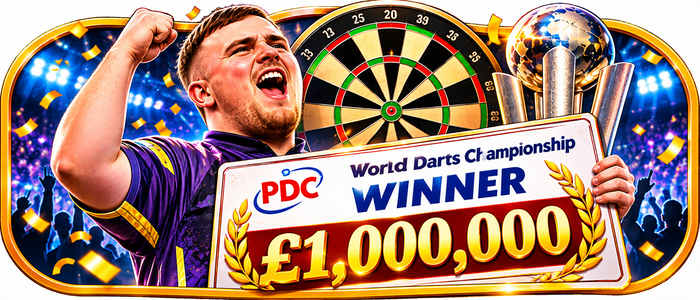
The PDC doubled the total prize fund from £2.5 million to £5 million and increased the winner’s prize from £500,000 to an extraordinary £1 million.
The championship also expanded to 128 participants, creating additional opportunities for players to compete on the sport’s biggest stage.
Luke Littler made history by winning the championship and collecting the first £1 million winner’s prize in professional darts.
He defeated Gian van Veen 7–1 in the final, successfully defending his world title.
The achievement was remarkable not only because of Littler’s young age and sporting success, but also because it symbolised the extraordinary commercial growth of professional darts.
The new prize structure rewarded competitors throughout the tournament. The runner-up received £400,000, semi-finalists earned £200,000 each and quarter-finalists collected £100,000.
Even players eliminated in the first round received £15,000, although their individual expenses and financial obligations still needed to be considered.
The £1 million milestone placed professional darts in an entirely new financial category and demonstrated the enormous value that major championship success can now generate.
The Evolution of Professional Darts Prize Money comming to the top.
10. How Was the £5 Million Prize Fund Distributed in 2026?
The 2026 World Championship did not simply reward the eventual winner. The increased prize fund provided substantial payments across the entire field.
| Finishing Position | Prize Money Per Player |
|---|---|
| Champion | £1,000,000 |
| Runner-up | £400,000 |
| Semi-final losers | £200,000 |
| Quarter-final losers | £100,000 |
| Last 16 losers | £60,000 |
| Last 32 losers | £35,000 |
| Last 64 losers | £25,000 |
| Last 128 losers | £15,000 |
This structure demonstrates how the growth of prize money can benefit more than just the leading players.
However, there remains a substantial difference between reaching the World Championship once and earning a consistent living throughout the professional season.
11. What Caused Professional Darts Prize Money to Increase?
The enormous growth in professional darts prize money did not happen by accident. Several important factors helped transform the financial structure of the sport.
Television Broadcasting
Television has played a central role in the development of professional darts. Broadcasting agreements provide tournament organisers with revenue and allow sponsors to reach large audiences.
As darts became more popular with television viewers, the commercial value of major competitions increased.
Commercial Sponsorship
Sponsors contribute financially to tournaments in exchange for advertising opportunities, naming rights and exposure to spectators.
The ability to attract major commercial partners has helped organisers increase prize funds and develop larger events.
Larger Arenas and Ticket Sales
Modern darts tournaments frequently attract thousands of enthusiastic spectators. Ticket revenue, hospitality packages and related commercial activities contribute to the financial success of major events.
International Expansion
Professional darts has expanded beyond its traditional British and European markets. International tournaments and television coverage have introduced the sport to new audiences and potential commercial partners.
Recognisable Sporting Personalities
Stars such as Phil Taylor, Michael van Gerwen, Peter Wright and Luke Littler have helped attract attention to professional darts through their achievements, personalities and memorable rivalries.
Together, these factors have transformed darts into a commercially successful spectator sport capable of supporting increasingly substantial prize funds.

12. How Much Can Professional Darts Players Earn?
The earnings of professional darts players vary enormously depending on tournament results, ranking position, sponsorship agreements and the number of events they enter.
The very best players can earn substantial amounts through major championships, ProTour competitions, exhibition appearances and commercial partnerships.
However, tournament prize money should not be confused with a guaranteed salary.
Many professional darts players operate as independent competitors. Their earnings depend heavily on performance, and they may need to pay significant expenses associated with their careers.
Travel, hotels, equipment, practice facilities, management fees and taxation can all affect the amount of money a player ultimately retains.
A player who earns £50,000 in tournament prizes does not necessarily have £50,000 available as personal income.
Likewise, sponsorship income varies dramatically. A famous world champion may attract major commercial deals, while a developing professional may receive little or no financial support outside tournament winnings.
This is why consistent performance across an entire season is often more important financially than one successful tournament.
13. The PDC Order of Merit – Why Prize Money Matters Beyond Earnings
In professional darts, prize money is not only a financial reward. It also plays an important role in determining player rankings.
The PDC Order of Merit is based on qualifying prize money earned over a rolling two-year period.
This means that a successful performance in a major ranking tournament can influence a player’s position in the world rankings.
A higher ranking can provide advantages, including qualification for important competitions and favourable seeding positions.
However, not every tournament payment contributes towards the main Order of Merit. Certain invitational competitions and bonuses operate outside the traditional ranking system.
The relationship between prize money and ranking positions creates additional pressure during major championships.
A player defending a large amount of ranking money from two years earlier may experience a significant drop if they fail to reproduce their previous success.
Conversely, an unexpected run to a major final can transform a player’s financial position and ranking prospects simultaneously.
The modern ranking system therefore makes prize money an essential part of professional darts strategy.
14. Prize Money Outside the World Championship
Although the World Championship receives the greatest attention, professional darts offers numerous other opportunities to earn substantial prize money.
For 2026, the PDC announced significant increases across several major tournaments.
The Premier League prize fund increased to £1.25 million, with £350,000 allocated to the overall champion.
The World Matchplay and Grand Slam of Darts each received £1 million prize funds.
Meanwhile, the World Grand Prix, UK Open, European Championship and Players Championship Finals were each allocated £750,000.
The PDC also increased prize funds for European Tour and Players Championship events, providing additional earning opportunities throughout the professional calendar.
These developments are important because a successful professional circuit requires more than one lucrative annual championship.
Players need regular opportunities to compete, develop their careers and earn money across different levels of the sport.
The expansion of tournament prize funds demonstrates how professional darts has developed into a year-round international business.
15. Women’s Darts and the Development of Prize Money
The growth of professional darts has also created opportunities to improve the financial rewards available in women’s competitions.
Historically, women’s darts tournaments have generally offered considerably smaller prize funds than the leading men’s-dominated professional events.
The PDC Women’s Series has helped establish additional competitive opportunities, while the Women’s World Matchplay provides a televised platform for leading female players.
For 2026, the PDC announced that the Women’s World Matchplay prize fund would increase to £40,000.
The organisation also introduced increases for Women’s Series events as part of its broader investment in professional darts.
Players such as Fallon Sherrock, Lisa Ashton and Beau Greaves have helped increase the visibility of women’s darts through their achievements and performances.
Although significant financial differences remain, continued investment could help create more sustainable career opportunities for female competitors.
The long-term development of women’s darts will depend on participation, sponsorship, broadcasting exposure and the availability of competitive pathways.
16. Can Professional Darts Prize Money Continue to Grow?
The introduction of a £1 million prize for the world champion raises an interesting question: how much further can professional darts prize money increase?
There are several reasons to believe that additional growth is possible.
The sport continues to attract international attention, major tournaments regularly generate passionate crowds and emerging players introduce darts to younger audiences.
Digital broadcasting, social media and international sponsorship opportunities may also contribute to future commercial development.
However, larger prize funds are not guaranteed. Tournament organisers must balance commercial revenue, operating expenses and investment in the wider professional circuit.
The most important long-term objective may be ensuring that financial growth benefits players at different levels rather than concentrating exclusively on world champions.
Improved earning opportunities for developing professionals, women and international competitors could help strengthen the sport’s competitive future.
Whether the next major milestone will be a £1.5 million or £2 million winner’s prize remains uncertain, but the financial transformation already achieved is extraordinary.
Frequently Asked Questions About Professional Darts Prize Money
How much did the first darts world champion win?
Leighton Rees received £3,000 for winning the inaugural BDO World Darts Championship in 1978.
How much did the first PDC world champion receive?
Dennis Priestley earned £16,000 for winning the inaugural PDC World Championship in 1994.
Who was the first darts player to win £1 million in a single World Championship?
Luke Littler became the first player to collect a £1 million winner’s prize at the 2026 PDC World Championship.
How much was the total 2026 World Championship prize fund?
The total prize fund was £5 million, distributed among 128 competitors according to their finishing positions.
Do professional darts players receive a salary?
Most professional players do not receive a guaranteed salary from the PDC simply for competing. Their income generally comes from prize money, sponsorships, exhibitions and other commercial activities.
Does all darts prize money count towards the world rankings?
No. The PDC Order of Merit uses qualifying ranking prize money. Some invitational tournaments and bonus payments do not contribute to the main world rankings.
Can amateur darts players earn prize money?
Yes. Many amateur and open tournaments offer cash prizes, although the amounts are usually much smaller than those available at major professional championships.
Final Thoughts – From £3,000 to £1 Million
The Evolution of Professional Darts Prize Money is one of the most remarkable success stories in the history of the sport.
When Leighton Rees won the inaugural BDO World Championship in 1978, his prize was £3,000. Nearly five decades later, Luke Littler collected £1 million for winning the 2026 PDC World Championship.
This transformation reflects decades of investment, television coverage, sponsorship and the achievements of extraordinary players who helped make darts popular around the world.
From Eric Bristow and Phil Taylor to Michael van Gerwen and Luke Littler, successive generations of champions have contributed to the growth of professional darts.
Yet the financial future of the sport is about more than enormous prizes for individual champions. A strong professional circuit also requires opportunities for developing players, international competitors and future generations of talent.
If darts continues to attract new audiences and commercial investment, further increases in prize money may become possible.
One thing is certain: professional darts has travelled an extraordinary distance from its humble beginnings, and its financial history is still being written.
The Wizard of Darts Team
Sources and Further Reading
For official tournament announcements, historical results and information about professional darts, visit the following resources.
Professional Darts Corporation – Official Website
Darts Database – Historical Tournament Results
Darts World – Historic £1 Million Championship Prize Announcement